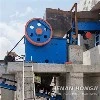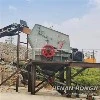

The European-style jaw crusher consists of several key components:
Frame: Serves as the foundation for the entire machine, providing stable support.
Fixed Jaw: Equipped with a stationary jaw plate, this component remains fixed during the crushing process.
Moving Jaw: Connected to the fixed jaw via linkage rods, with its upper section mounted on an eccentric shaft; its mobility is its primary operational characteristic.
Eccentric Shaft: Drives the movement of the moving jaw through its eccentric design; a bearing housing is positioned between the shaft and the moving jaw.
Side Guard Plates: Located on either side of the moving and fixed jaw plates, these ensure operational safety and prevent material from becoming jammed.
A key feature of this design is that the moving jaw plate extends approximately 80–250 mm above the fixed jaw plate. This configuration not only protects the moving jaw and bearing housing by preventing crushed material from entering, but also ensures smooth material discharge and enhances overall operational safety. The moving jaw's bearing housing features an excellent sealing system, which minimizes oil leakage and improves both the machine's performance and energy efficiency. The unit operates smoothly with low noise levels, making it particularly well-suited for crushing medium-hardness materials such as rock, ore, and cement clinker.
European-style jaw crushers are widely used in sectors including mining, construction materials, silicate production, metallurgy, road construction, and the chemical industry. Their high efficiency, reliability, and energy-saving capabilities have facilitated their widespread adoption and promotion across various industrial production applications.