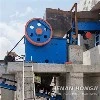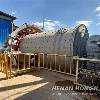

In the management of solid waste from mining operations, grinding equipment is primarily used to process waste rock, tailings, and other solid waste materials into fine powders. These powders serve as raw materials for the production of cement, concrete, and various advanced materials, thereby facilitating resource recovery and reducing production costs.
Key Applications of Grinding Equipment in Mining Solid Waste Management
Production of Raw Materials for Cement and Concrete
Once processed by grinding equipment, mining solid waste-such as waste rock and tailings-can replace a portion of the clay and limestone used in cement raw meal. For instance, vertical roller mills (such as those manufactured by Guilin Mining Machinery) can grind tailings to a specific fineness, allowing them to be used directly in the production of cement clinker and reducing reliance on non-renewable natural resources.
When used as an admixture in concrete, these finely ground solid waste materials can significantly enhance the concrete's compressive, tensile, and shear strength. Furthermore, as they are more cost-effective than virgin raw materials, they offer substantial economic benefits.
Manufacturing of Advanced Materials
Grinding equipment can process mining solid waste into ultra-fine powders, which are then used to create new types of construction materials-such as aerated concrete and thermal insulation-or functional materials, including components for ceramics and glass. For example, ground solid waste materials like barite or calcite can be utilized in the production of low-emissivity (low-E) glass or eco-friendly coatings.
Underground Mine Backfilling
Ground solid waste (such as waste rock and tailings) can be mixed with cement and water to create a slurry, which is then used to backfill mined-out areas underground. This approach not only reduces the land footprint required for surface waste storage and mitigates the risk of underground collapses, but also enables the large-scale utilization of solid waste.