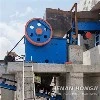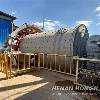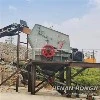

Grinding mills typically process materials with relatively small feed sizes, yielding a fine product-often 0.074 mm or even smaller. Comminution is achieved through the impact and attrition forces exerted on ore particles trapped between grinding media (which may be metallic, such as steel, or non-metallic). Based on the fineness of the final product, grinding is categorized into coarse grinding (1–0.3 mm), fine grinding (0.1–0.074 mm), and ultrafine (micro) grinding (typically producing powders of 1–10 µm or finer).
Grinding mills are generally classified as follows:
1. Ball mills: These feature a cylindrical or conical shell and use metal balls as the grinding medium. Depending on the discharge method, they are further classified as overflow-type or grate-discharge-type. Ball mills are widely used in mineral processing plants for the fine grinding of various ores.
2. Rod mills: These utilize a long cylindrical shell and metal rods as the grinding medium. Due to their selective grinding action, they produce a product with a uniform particle size and are primarily used in gravity separation plants.
3. Pebble mills: These operate without steel media, instead using pebbles or hard rock fragments of various sizes to grind the ore.
4. Autogenous (AG) mills: In these short-cylindrical mills, ore is pulverized through mutual impact and attrition; the ore itself acts as both the grinding medium and the material being ground. To enhance grinding efficiency, a small amount (2%–8%) of steel balls is sometimes added-a process known as semi-autogenous (SAG) grinding. Autogenous mills offer a high reduction ratio, which can significantly simplify the overall comminution circuit.
5. Ultrafine grinding equipment: Currently used primarily for the deep processing of non-metallic minerals, this category includes mechanical-type and fluid-energy (jet) impact-type mills. Mechanical ultrafine grinding equipment employs high-speed rotating components-such as hammers, blades, or pins-to strike coarse ore particles that have been dispersed against the inner walls of the grinding chamber by centrifugal force, or to impart linear velocity to these particles, causing them to collide with one another. Such equipment includes vibration mills, stirred mills, suspension roller mills (Raymond mills), tower mills, colloid mills, centrifugal mills, and high-pressure (compression) roller/disk mills. Jet-type ultrafine grinding equipment utilizes high-pressure gas streams-such as compressed air or superheated steam-to achieve size reduction through the impact, collision, friction, and shearing of material particles. The resulting product typically has a particle size of 1–5 μm or even finer. Examples of this category include flat-type jet mills, circulating-tube jet mills, and various other jet-milling systems. These grinding devices are primarily used for the ultrafine pulverization of materials.