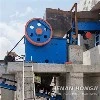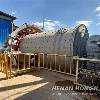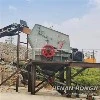

High Efficiency and Energy Conservation
Taking the vertical roller mill from Guilin Mining Machinery as an example, it employs a grinding mechanism where rollers press directly against a rotating table. This approach ensures high energy efficiency, reducing power consumption by 30%–50% compared to traditional ball mills. An integrated classification system allows for real-time adjustment of product fineness, preventing over-grinding and further conserving energy.
Strong Adaptability
The equipment can process a wide range of solid mining waste, including high-hardness materials (such as manganese ore and bauxite) and materials with high moisture content (such as gypsum and coal). It accommodates large feed sizes-up to 50 mm-which eliminates the need for preliminary crushing stages and simplifies the overall production process.
Excellent Environmental Performance
The equipment features a fully enclosed design and is equipped with a pulse-jet dust collector. Dust emission concentrations are kept below 10 mg/m³, meeting national environmental standards. Furthermore, its low-noise design (≤85 dB) minimizes impact on the surrounding environment.
- Processing Tailings for Cement Raw Mix
A large cement plant utilizes a vertical roller mill to grind iron tailings to a fineness where the residue on an 80 μm sieve is ≤5%. This material replaces 15% of the limestone raw material. Practical application has confirmed that the resulting cement clinker meets strength requirements, while production costs are reduced by 8–10 RMB per ton of cement, leading to annual raw material savings exceeding 10 million RMB.
- Producing Concrete Admixtures from Waste Rock
A mining enterprise uses a vertical roller mill to process waste rock into a fine powder with a specific surface area of ≥400 m²/kg, which is then incorporated into concrete at a ratio of 10%–20%. Testing shows that the 28-day compressive strength of the concrete increases by 10%–15%, and its impermeability grade improves by 1–2 levels. Additionally, cement consumption is reduced by 15%, and carbon emissions are lowered by 12%.
- Manufacturing Novel Wall Materials from Manganese Slag
A building materials company employs a vertical roller mill to grind manganese slag to a particle size of D50 ≤ 20 μm. This powder is then mixed with cement and a foaming agent to produce aerated concrete blocks. The product's bulk density is reduced by 30% and its thermal insulation performance is improved by 25%; furthermore, the solidification rate of manganese exceeds 99%, eliminating the risk of heavy metal contamination.