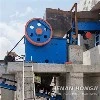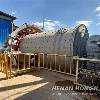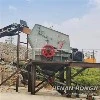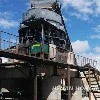

This equipment is primarily designed for the grinding of various non-flammable and non-explosive mineral materials-such as those found in the construction materials, chemical, fertilizer, metallurgical, mining, refractory, ceramic, steel, thermal power, and coal industries-provided the materials have a Mohs hardness below 9 and a moisture content below 6%. The fineness of the finished product can be adjusted anywhere between 30 mesh and 400 mesh. It is suitable for processing over a thousand types of materials, including cement (raw materials and clinker), quartz, feldspar, calcite, gypsum, limestone, dolomite, graphite, fluorite, wollastonite, phosphate rock, calcium-magnesium-phosphate fertilizer, urea, electrolytic manganese, ferromanganese alloys, coal, coal gangue, slag, zircon sand, talc, granite, potash feldspar, marble, barite, ceramics, and glass.
The process of using external force to reduce large particles into smaller ones is called "crushing," and the machinery used for this purpose is known as a "crusher." The process of using external force to reduce smaller particles into a fine powder is called "pulverizing" or "grinding" (collectively referred to as "milling"), and the machinery used is known as "milling equipment." The combination of crushing and milling is termed "crushing and grinding," and the machinery used is referred to as "crushing and grinding equipment."
In the mineral processing industry, the costs associated with crushing and grinding operations account for, on average, more than 40% of total production costs. Furthermore, investment in grinding equipment typically represents approximately 60% of the total capital investment for a mineral processing plant.
In the cement industry, costs related to crushing and grinding operations account for about 20% of total production costs. Crushing machinery consumes approximately 10% of a plant's total electricity, while milling (pulverizing) machinery accounts for 60%.
With the rapid development of the modern socio-economy, the demand for and production scale of various metallic, non-metallic, and chemical minerals-as well as materials like cement and construction supplies-have continued to grow, leading to a sharp increase in the volume of materials requiring crushing and grinding. Since the 1990s, the global annual volume of materials subjected to crushing and grinding has exceeded 10 billion tonnes. In my country, the annual output of brittle materials has reached over 1.5 billion tonnes, including approximately 240 million tonnes of iron ore, over 100 million tonnes of non-ferrous metal ores, more than 260 million tonnes of non-metallic minerals, 30 million tonnes of chemical minerals, about 400 million tonnes of cement, and over 470 million tonnes of limestone for construction materials. The vast majority of these materials require crushing and grinding, which underscores the significant role that crushing and powder engineering play in the national economy.