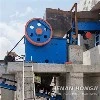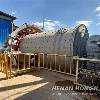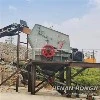

A cement rotary kiln consists of several components, including the kiln shell, a drive system, support and thrust roller assemblies, kiln lining, kiln-end seals, and a kiln-head assembly equipped with a fuel-firing system.
Based on the heating method, these kilns are categorized into two main types: internally heated and externally heated.
In an internally heated rotary kiln, the material comes into direct contact with the flame and flue gases. The atmosphere inside the kiln-whether oxidizing or reducing-can be controlled through adjustments. The inner wall of the kiln shell is lined with refractory bricks, while the head and tail hoods are lined with high-strength, wear-resistant castable material. Flexible seals are installed between the kiln shell and the hoods, effectively preventing dust emissions and material leakage. These kilns can be designed with multiple support points, allowing the shell to reach lengths of up to 60 meters and operating temperatures as high as 1600°C. They offer high production capacity and can utilize various fuels, including liquefied petroleum gas (LPG), natural gas, fuel gas, fuel oil, pulverized coal, and raw coal.
In an externally heated rotary kiln, the material does not come into direct contact with the flame or flue gases. The heat source is located between the heating furnace and the kiln shell, with heat transferred to the material through the wall of a heat-resistant steel shell. The heating furnace is lined with refractory fibers, which helps conserve energy and reduce consumption. Due to the heating method and the materials used for the shell, these kilns are generally limited to a length of 15 meters or less and an operating temperature of 1200°C or less. They have a lower production capacity and can be heated via electricity, gas, oil, or coal.
Cement rotary kilns are primarily classified into dry-process and wet-process types. Kilns used in wet-process production-known as "wet-process kilns"-handle raw material prepared as a slurry with a moisture content of 32% to 40%. Because the raw materials are processed into a fluid slurry, they mix thoroughly, resulting in a highly uniform raw mix composition and high-quality clinker-the primary advantage of the wet process. Dry-process rotary kilns present the opposite set of characteristics. In the dry process, raw materials are prepared as a dry powder with a moisture content typically below 1%, which eliminates the need for the significant amount of heat required to evaporate water in the wet process. However, "open-circuit" (hollow-type) kilns often have high heat consumption due to the high temperature of their exhaust gases. In the dry production process, raw materials are prepared as a dry powder, which has poorer fluidity than a slurry. Consequently, the raw materials are not well mixed, leading to a lack of compositional uniformity.