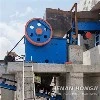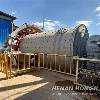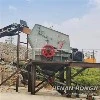

Selecting the appropriate jaw crusher requires a comprehensive evaluation of five key factors: the crushing process, layout space, production capacity, equipment cost, and operating costs.
Details are as follows:
Crushing Process: In a typical setup, material is delivered to the jaw crusher via truck transport, while the crushed product is moved downstream by a belt conveyor. To ensure a continuous and uniform feed, a vibrating feeder must be installed between the storage hopper and the crusher. Uneven feeding can lead to equipment overload or reduced crushing efficiency; therefore, the feeding equipment must be carefully selected to align with the specific process flow.
Layout Space: Jaw crushers can be arranged in a stepped configuration against a hillside, with the feed hopper integrated into the slope to save space. While the crusher unit itself has a small footprint, sufficient space must be allocated for a vehicle unloading platform. In sites with limited space, compact equipment should be prioritized. Furthermore, the unloading platform must be properly aligned with the crusher's feed opening to prevent material accumulation and ensure efficient transport.
Production Capacity
Equipment Specifications and Models: The processing capacity of a jaw crusher is determined by factors such as rotational speed, nip angle, main shaft eccentricity, and the dimensions of the feed opening. Since parameters vary significantly between manufacturers, selection should be based on specific operational requirements.
Feed Opening Dimensions: Equipment models are typically designated by the dimensions of the feed opening (length × width), which directly dictate the maximum size of material that can be processed. For example, a "900×1200" model features a 1200mm-wide feed opening and can handle material with a diameter of up to 1000mm.
Capacity Matching: The equipment must be selected in accordance with the overall production line capacity to avoid bottlenecks caused by insufficient throughput or resource wastage resulting from excessive capacity.
Equipment Cost
Value for Money: While meeting production requirements, prioritize products that offer a balance of reasonable pricing and stable performance. High-priced equipment may come with superior service, but one should be wary of excessive markups; conversely, low-priced equipment may carry quality risks, necessitating a thorough assessment of the manufacturer's reputation and the product's track record.
Long-term Cost Considerations: Initial investment should be weighed against the equipment's expected lifespan and maintenance costs. Short-term savings should not come at the expense of long-term operational risks.
Operating Costs
Consumption of Wear Parts: The replacement frequency of wear parts-such as jaw plates and liner plates-directly impacts costs. It is essential to select components made from wear-resistant materials and to check whether the manufacturer offers optimization solutions for these parts.
Power Consumption: Equipment power is directly proportional to energy consumption; therefore, high-efficiency, energy-saving crushers can reduce long-term operating costs. For instance, equipment utilizing variable-frequency drive (VFD) technology can dynamically adjust power output based on material hardness, thereby minimizing unnecessary energy expenditure.
Maintenance Costs: The structural complexity of the equipment influences both the difficulty and the expense of maintenance. Crushers with a simple, modular design are easier to maintain, which helps reduce downtime and repair costs.
Conclusion: Selecting a jaw crusher requires a comprehensive evaluation of process requirements, site conditions, production targets, budget constraints, and long-term costs. By comparing the technical specifications, service offerings, and industry reputation of different manufacturers, you can identify the model best suited to your specific needs.