
The operating principle of a sand and gravel dryer is based on the concepts of heat balance and heat exchange.
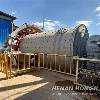
Quartz sand is transported to a hopper via a belt conveyor or bucket elevator, and then fed into the dryer's inlet end through a feed chute. The slope of this chute must exceed the material's natural angle of repose to ensure smooth flow into the dryer. The dryer consists of a rotating cylindrical drum, positioned at a slight incline relative to the horizontal plane. Material is introduced at the higher end, while the heat-carrying medium (heating medium) enters from the lower end, moving in a counter-current direction to the material; in some configurations, the heating medium and the material may also move in the same direction (co-current flow). As the drum rotates, gravity causes the material to move toward the lower end. During this transit, the wet material receives heat-either directly or indirectly-from the heating medium, resulting in its drying. The dried material is then discharged via a belt conveyor or screw conveyor. The inner wall of the drum is equipped with lifting flights (lifters), which scoop up the material and shower it downward; this increases the contact surface area between the material and the gas stream, thereby accelerating the drying rate and facilitating the forward movement of the material. Common heating media include hot air or flue gases. After exiting the dryer, the gas stream typically passes through a cyclone separator to capture any entrained material. If further reduction of dust content in the exhaust gas is required, the gas may be routed through a baghouse filter or a wet scrubber before final discharge.